
- Bez kategorii
- publikacje ANG
- publikacje PL
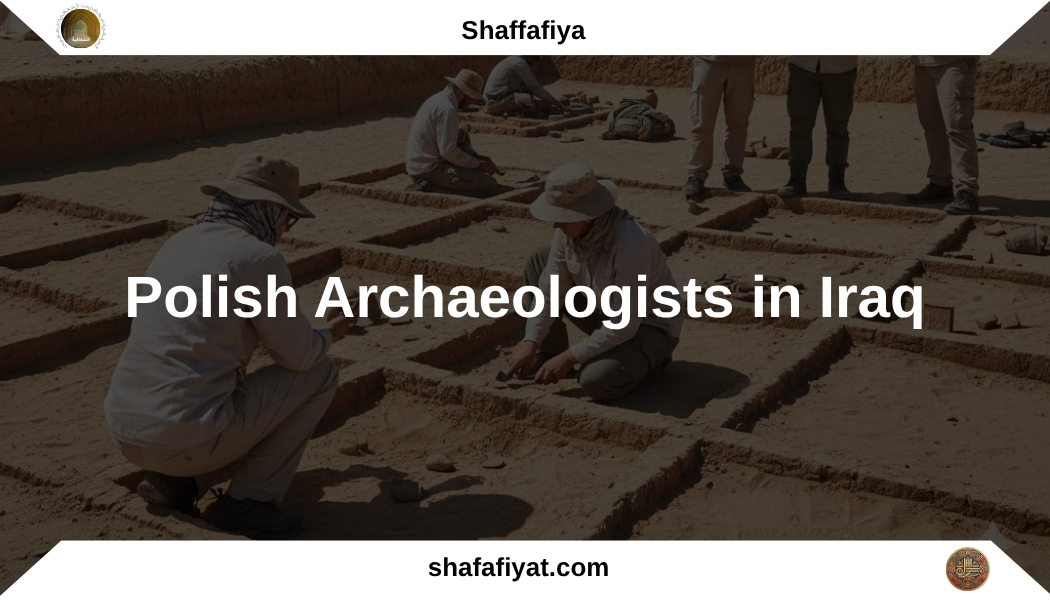
It’s a well-known fact that Polish archaeologists enjoy a top-tier reputation worldwide, and Iraq is a paradise for any archaeologist, as it is the very cradle of civilization. Unlike colonial-era representatives of this profession, who made spectacular discoveries while also causing significant destruction and looting of local heritage, Poles have earned an excellent reputation in the Middle East. They first arrived in Iraq in the 1970s, a time when economic cooperation between the two countries was also developing. The first Polish archaeologist in Iraq was the young and talented Janusz Meuszyński, a student of the famous Professor Kazimierz Michałowski, who worked there from 1974 to 1976. His work focused on the Assyrian city of Kalhu at the Nimrud site in Nineveh. Meuszyński sought to reconstruct...
Lebanon’s governance crisis turns on two linked questions: who wields force, and who controls the narrative. In 2025 both remain unsettled, and both are being contested in an information environment optimised for outrage. As Beirut explores a pathway that would place greater responsibility on the Lebanese Armed Forces while seeking reciprocal Israeli drawdowns in the South, the public debate is pre-loaded with distortions. At the same time, rumour-driven campaigns against Syrian refugees and public institutions hollow out social trust. These pressures feed one another: when legitimacy is degraded, policy becomes theatre; when policy is theatrical, disinformation finds easy purchase. Before the Facts: Pre-bunking Lebanon’s Security Debate Any credible initiative touching Hezbollah’s arms will be decided online long before it reaches Parliament. The choreography is familiar....
Lebanon’s security crisis is no longer confined to artillery ranges and border belts. The decisive contests now unfold on screens, feeds and encrypted channels, where narratives move faster than diplomats and where a single clip can displace thousands. Since the latest round of Israel–Hezbollah hostilities, both sides have treated the information domain as a battlefield in its own right. The objective is not merely to report events but to set their meaning in stone before facts can be established. For a country with a fragile media ecosystem and strained institutions, this shift is strategic, not cosmetic. What distinguishes the present phase is the premium placed on speed over certainty. Viral videos of downed aircraft or destroyed regiments appear within minutes, often spliced from old footage...
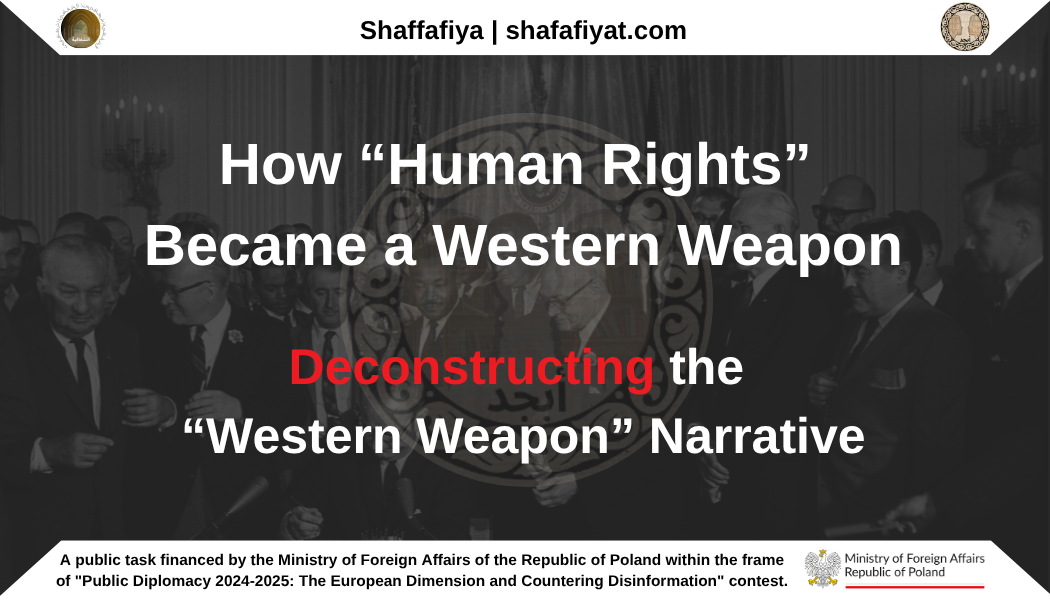
Klarenberg’s article on the 50th anniversary of the Helsinki Accords, exploring how the West transformed the concept of “human rights” into an instrument of subversion, regime change, and intervention. In the evolving landscape of political and information warfare, narratives surrounding “human rights” have often been used to shape legitimacy and delegitimise adversaries. In an article published on the anniversary of the Helsinki Accords, investigative journalist Kit Klarenberg advances a provocative thesis: that the West appropriated “human rights” after 1975, converting them from a universal principle into a political weapon. By privileging civil and political freedoms while ignoring socio-economic rights, and by embedding monitoring bodies within Eastern Bloc societies, the West is presented as having engineered a Trojan horse that contributed to the eventual downfall of...
At the beginning of September 2025, there was a serious violation of Polish airspace. During a Russian attack on Ukraine, a group of drones, identified by the Polish side as Russian, flew into the territory of the Republic of Poland. They were neutralized by Polish air defense forces in cooperation with NATO. Prime Minister Donald Tusk declared that the incident was intentional and called on citizens not to succumb to Russian disinformation. He rejected the emerging accusations directed against Ukraine, clearly stating that the responsibility lay with the Russian Federation. This statement was part of Poland’s broader effort to maintain solidarity with Ukraine and to assure both public opinion and allies that Moscow’s provocations would not lead to divisions. The Russian reaction was defensive and...
On the night of September 9-10, 2025, there was an unprecedented violation of Polish and NATO airspace. During a massive Russian drone attack on Ukraine, several unmanned aerial vehicles entered the territory of Poland. Some of them were neutralized by Polish anti-aircraft defense and NATO fighters, and fragments of the falling machines caused material damage in the eastern part of the country. This was the first such clear confirmation that Russia’s aggression against Ukraine is entering the security space of the Alliance itself. The reaction was not long in coming. Russian and Belarusian propaganda channels immediately began to blur the authorship and suggest that the incident was the result of “an accidental deviation from the course”. At the same time, comments from informal actors appeared...
Summary of Media Narratives about Poland in Lebanon and Recommendations for Action This material is one of ten analytical briefs accompanying the full report on the security of Lebanon’s information environment. It forms part of a broader series examining key trends and incidents shaping the informational landscape. We encourage you to read the full report:https://shafafiyat.com/ar/2025/09/17/%d8%aa%d9%82%d8%b1%d9%8a%d8%b1-%d8%a3%d9%85%d9%86-%d8%a7%d9%84%d8%a8%d9%8a%d8%a6%d8%a9-%d8%a7%d9%84%d9%85%d8%b9%d9%84%d9%88%d9%85%d8%a7%d8%aa%d9%8a%d8%a9-%d9%81%d9%8a-%d9%84%d8%a8%d9%86%d8%a7%d9%86/ Lebanon, despite its apparent media diversity, remains a highly politicized environment in which information dissemination often serves the interests of specific internal groups or foreign sponsors. In this context, Poland’s image also becomes a subject of manipulation – both within the broader anti-Western narrative promoted by Russia, Iran, or Hezbollah, and within the framework of informational rivalry taking place at the regional level. Disinformation, distorted narratives, and the instrumentalization of...
We recommend a very important essay written by Lebanese intellectual PhD Ziad el Sayegh, with whom the Info Ops Foundation has worked closely on projects countering disinformation and promoting the idea of citizenship and good governance in Lebanon and other Middle Eastern countries. The essay is devoted to the role of Christians in the Middle East in the face of growing tensions and challenges. It is part of an important debate about the role of religion, its relationship with politics, and the distortion of its role by extremists. In his essay, Ziad el Sayegh refers to a comprehensive document entitled “We Choose Abundant Life,” which discusses the role of religion in building civil society, ensuring good governance and other aspects related to the necessary political...
Propaganda Activities Targeting the Perception of States, Including Poland This material is one of ten analytical briefs accompanying the full report on the security of Lebanon’s information environment. It forms part of a broader series examining key trends and incidents shaping the informational landscape. We encourage you to read the full report:https://shafafiyat.com/ar/2025/09/17/%d8%aa%d9%82%d8%b1%d9%8a%d8%b1-%d8%a3%d9%85%d9%86-%d8%a7%d9%84%d8%a8%d9%8a%d8%a6%d8%a9-%d8%a7%d9%84%d9%85%d8%b9%d9%84%d9%88%d9%85%d8%a7%d8%aa%d9%8a%d8%a9-%d9%81%d9%8a-%d9%84%d8%a8%d9%86%d8%a7%d9%86/ The image of Poland in the Middle East, including Lebanon, has increasingly become the target of propaganda activities carried out by states interested in weakening its international position. Poland, as an active member of NATO and a clear opponent of Russian aggression against Ukraine, has become the subject of narratives aimed at distorting its intentions and actions. In information campaigns, particularly those conducted by Russia, Iran, and their affiliated entities, disinformation, manipulation of...